Lackawanna River Heritage Trail Featured in “Heart & Soul”

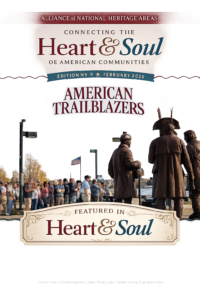
The Lackawanna River Heritage Trail is part of a national story of connection, renewal, and community pride in the latest edition of Heart & Soul, a publication of the Alliance of National Heritage Areas highlighting how heritage corridors across the country bring people together for the common good. Tracing a historic river and rail corridor, the LRHT follows pathways first used by Indigenous peoples and later shaped by the railroads that powered the region’s industrial rise. Today, those same routes have been reclaimed as a 70-mile multi-use trail, offering opportunities for walking, biking, running, and outdoor exploration alongside a river that tells a story of resilience and renewal.

As featured in Heart & Soul, the Trail reflects how National Heritage Areas transform historic infrastructure into vibrant public spaces. Once dominated by rail lines and heavy industry, the corridor now connects communities from Carbondale to Scranton through restored bridges, riverfront access, and scenic trail segments that invite residents and visitors alike to experience the landscape at a human pace.

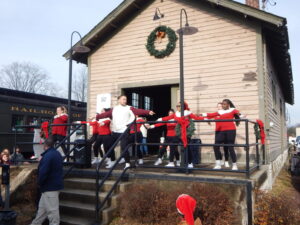
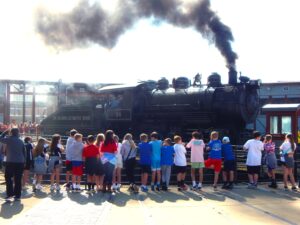
The Trail also serves as a living classroom and gathering place. It links to nationally significant sites like Steamtown National Historic Site, where the region’s railroading legacy still comes alive, and supports educational programs, heritage tourism, and seasonal traditions that strengthen community identity. Each holiday season, the Santa Train builds on this shared corridor to unite communities in a celebration of Christmas in a Small Town—a reminder that heritage is not only preserved but lived.

By weaving together history, recreation, education, and stewardship, the Lackawanna River Heritage Trail embodies the spirit highlighted in Heart & Soul: places where past and present meet, and where local stories contribute to a broader national narrative. Along the Trail, the echoes of footpaths, rail lines, and river currents continue to guide new generations—proving that the journey of discovery is never truly finished.

New Disc Golf Course Expands Outdoor Recreation at McDade Park

A new 12-hole, heritage-themed disc golf course at McDade Park is expected to be ready for play this spring, further expanding outdoor recreation opportunities in Lackawanna County. The project was supported by the Lackawanna Heritage Valley National and State Heritage Area through its Partnership Grant Program, which helps local partners develop projects that connect recreation, heritage, and community.

Lackawanna County officials announced plans for the course last April, generating excitement among local disc golfers and fans of the sport, which saw rapid growth during and after the COVID-19 pandemic. The course is located within the county-owned park and is designed as an accessible, all-ages amenity.

“Projects like this are a great example of how outdoor recreation and heritage interpretation can work hand in hand,” said Joseph Corcoran, executive director of the Lackawanna Heritage Valley Authority. “Through our Partnership Grant Program, we’re able to support local initiatives that activate public spaces, celebrate the region’s character, and encourage people to experience our parks in new ways.”

Corcoran noted that the course also aligns with broader efforts tied to America 250 PA and place-based learning. “As we approach the nation’s 250th anniversary, it’s important to create opportunities for young people to learn about their communities through direct experience,” he said. “Projects like this introduce youth to local landscapes and stories in an informal, hands-on way, helping build a sense of place, stewardship, and connection that can last well beyond a single visit.”

Unlike traditional golf, which uses clubs and balls, disc golf is played by throwing specialized discs toward elevated metal baskets. Players aim to complete each hole in as few throws as possible, making the sport accessible for beginners while remaining engaging for experienced players.

County officials have emphasized that the new course complements an already robust network of outdoor recreation opportunities throughout the region. By incorporating heritage themes into the course design, the project also reflects the broader mission of the Heritage Area to promote place-based experiences that highlight the Lackawanna Valley’s cultural and natural resources.

The disc golf course at McDade Park is anticipated to open later this spring, offering residents and visitors another way to enjoy the county’s parks and outdoor spaces.

Lackawanna Heritage Valley Supports Student Learning Through 2026 Educational Mini-Grants

SCRANTON — The Lackawanna Heritage Valley National and State Heritage Area announces the recipients of its 2026 Educational Mini-Grants Program, awarding nearly $4,000 to local schools to support curriculum-based, place-focused educational experiences across northeastern Pennsylvania.

The Educational Mini-Grants Program advances the Heritage Area’s mission to preserve, interpret, and promote the cultural, historical, and natural resources of the Lackawanna Valley by helping schools offset the cost of field trips and hands-on learning opportunities. These projects connect students directly to the region’s landscapes, waterways, historic sites, and cultural institutions—encouraging environmental awareness, historical understanding, and long-term stewardship.

“The Educational Mini-Grants Program reflects our commitment to connecting students with the places, stories, and landscapes that define the Lackawanna Valley,” said Joseph J. Corcoran, Executive Director of the Lackawanna Heritage Valley Authority. “By supporting hands-on learning experiences at historic sites, cultural institutions, and along the river and watershed, we are helping young people better understand their region’s heritage while fostering a sense of stewardship that will carry forward into the future.”

2026 Educational Mini-Grant Recipients

  • Forest City Regional School District (Grades 9–12)
    Students will study the Lackawanna River Watershed, examining water quality, sustainability, and aquatic ecology, and will present their findings to staff from the Pennsylvania Department of Conservation and Natural Resources.

  • Fell Charter School, Simpson
    Seeds of Learning on the Road will take middle school students to the Greenhouse Project in Scranton to explore pollinators, ecosystems, and applied environmental science.

  • Lackawanna Trail Elementary School
    Third-grade students will visit the Lackawanna Coal Mine Tour to learn how anthracite mining fueled America’s early 20th-century industrial growth and shaped the region.

  • John F. Kennedy School, Scranton
    Kindergarten students will participate in a Trout Release project, learning about aquatic life cycles, habitats, and watershed connections through hands-on environmental education.

  • McNichols Plaza Elementary School, Scranton (Grades K–3)
    Students will visit the Electric City Trolley Museum and take a historic trolley ride, learning how Scranton earned the nickname The Electric City.

  • Valley View High School (Art Students, Grades 9–12)
    Art students will visit the Everhart Museum to attend a workshop and explore exhibits connecting art, culture, and regional heritage.

  • Monticello School, Scranton
    Students will take a holiday visit to the Electric City Trolley Museum to view historic trolleys decorated in seasonal décor, blending transportation history with community tradition.

  • Valley View High School & Riverside High School (Grades 9–12)
    Students will tour multiple historic sites to research local history and develop questions for the annual gameshow hosted by the Lackawanna County Historical Society.

Through the Educational Mini-Grants Program, the Lackawanna Heritage Valley continues to invest in local education, experiential learning, and heritage stewardship, ensuring that the stories of the Valley’s people, places, and landscapes are carried forward by the next generation.

A New Year Built by Community

As a new year begins, the Lackawanna Heritage Valley National and State Heritage Area is taking a moment to reflect—and to say thank you. The past year was shaped by the people who showed up: volunteers, partners, educators, families, and supporters who believe in preserving and sharing the places, stories, and landscapes that define the Lackawanna Valley.

Bringing Heritage to Life

In partnership with the National Park Service, the National Park Foundation, and Steamtown National Historic Site, LHVA continued to connect people to the region’s railroad and industrial legacy through its signature heritage programs.
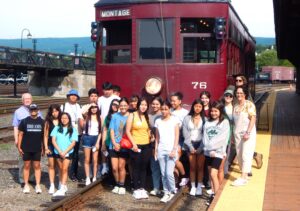
The 27th Annual Santa Train once again returned to the rails, welcoming families and visitors to a cherished holiday tradition shared across generations. Meanwhile, Heritage Express: 4th Grade Edition offered hundreds of students a hands-on journey through local history this year alone. Since the program’s return, thousands of students have explored the stories of railroads, industry, and community that helped shape northeastern Pennsylvania.

Opening the River

LHVA also made meaningful progress on the water. New public paddling access points in Carbondale and Mayfield are now open, offering safer and more convenient places for kayakers, canoeists, anglers, and families to experience the Lackawanna River. These projects not only expand outdoor recreation opportunities but also lay the groundwork for a future Lackawanna River Water Trail—an important step toward equitable, year-round river access.

Powered by Volunteers

None of this work happens without people willing to lend their time and energy. Over the past year, more than 400 volunteers contributed approximately 3,000 hours valued at more than $100,000 caring for the Lackawanna River Heritage Trail and the places it connects. From trail cleanups and tree plantings to education programs and special events, many were first-time volunteers—clear evidence that stewardship continues to grow throughout the valley.

Investing in Education, Culture, and the Arts

Through LHVA’s Partnership and Educational Grant programs, more than $48,000 was invested in local schools, nonprofits, and municipalities. These grants supported heritage education, environmental learning, arts and cultural initiatives, and community-based projects that help people of all ages connect with the region’s history and natural resources.

Looking Ahead

As the new year unfolds, LHVA is excited to build on this momentum—supporting volunteers, expanding trail and river connections, investing in education and culture, and strengthening the partnerships that keep the Lackawanna Valley vibrant and accessible.

The Heritage Area moves forward because people care—and because this community continues to show up.
Happy New Year and thank you for being part of the journey.

LHVA Unveils Major New Trail Connection in the Mid Valley

OLYPHANT — The Lackawanna Heritage Valley Authority (LHVA) is preparing to launch one of its most significant projects to date: a new pedestrian bridge and trail extension that will link Olyphant and Dickson City along the Lackawanna River Heritage Trail.

Estimated at nearly $2 million, the project will create a continuous network between a new Olyphant trail segment and the mile-long Dickson City Trail completed in 2021. At the heart of the effort is a 200-foot pedestrian bridge—the longest LHVA has ever constructed—which will span the river and close a critical gap in the Mid Valley trail system.

A new trailhead on South Valley Avenue will offer parking for about a dozen vehicles. From there, a 0.8-mile paved trail will follow the natural corridor of Eddy Creek before connecting to several streets in Olyphant. In addition to extending the regional trail, this segment will provide residents with a new walking loop close to home.

Engineers are now conducting geotechnical testing to determine the safest and most stable location for the bridge. A former mining bridge once crossed the river at this point, but its collapse several years ago required a complete rethinking of the design.

Funding includes more than $1.6 million from PennDOT’s Transportation Alternatives Set-Aside Program and $200,000 from DCED’s Greenways, Trails and Recreation Program for design work. While current estimates align with available funding, LHVA expects the final cost could reach the $2 million mark.

Owen Worozbyt, LHVA Director of Operations, says the real power of the project lies in how it brings communities together. “These trails are stitching the Valley back into one connected landscape,” he said. “People will be able to walk or bike from community to community in a way that feels natural, safe, and enjoyable.”

He added that environmental restoration is a key part of the work. “Every time we build a trail, we’re also healing a piece of land that’s been overlooked for decades. Trails introduce people to the river again—and that changes how we care for it.”

Celebrating 25 Years as a National Heritage Area: A Legacy of Connection, Conservation, and Community

Twenty-five years ago, Congress recognized what the people of the Lackawanna Valley had long understood: this region tells one of America’s most remarkable stories.

In 2000, the Lackawanna Heritage Valley was formally designated as a National Heritage Area, affirming the Valley’s role in shaping the nation’s industrial history, immigrant experience, and environmental rebirth.

Today, as we celebrate our silver anniversary, the Lackawanna Heritage Valley Authority (LHVA) continues to honor that legacy through stewardship, trail development, community partnerships, and the preservation of our shared heritage.

A Heritage Area with a Purpose

The National Heritage Area program recognizes places where natural, cultural, and historic resources combine to form a landscape worthy of national acknowledgement. Few regions embody that mission more clearly than the Lackawanna Valley — a place where anthracite coal powered America’s rise, where railroads connected communities, and where hardworking families shaped a cultural heritage that still defines Northeastern Pennsylvania.

The Lackawanna Heritage Valley became Pennsylvania’s first designated heritage area in 1991. And since 2000, LHVA has served as the region’s leading national agency for telling these stories, expanding access to outdoor recreation, and strengthening the connection between people and place.

The Authority Behind the Work

As the state-designated managing entity for the Lackawanna Heritage Valley National and State Heritage Area, LHVA is responsible for:

  • Development of the Lackawanna River Heritage Trail
  • Securing and managing state and federal grants
  • Holding and administering easements and rights-of-way
  • Overseeing engineering and capital construction
  • Maintaining public access to the river corridor
  • Delivering heritage tourism programs for schools, families, and visitors

This unique responsibility sets LHVA apart from other community organizations, with statutory authority, technical capacity, and land control required to build, maintain, and expand trail infrastructure.

Every mile of trail, every bridge, every overlook, every educational program — each reflects LHVA’s long-term commitment to the Valley’s future.

25 Years of Trail Building and Community Impact

Over the past quarter century, LHVA has worked with dozens of municipalities, state agencies, schools, nonprofits, and local businesses to bring transformative projects to life. These efforts have:

  • Reconnected communities to their river
  • Created construction and engineering jobs
  • Supported downtown revitalization
  • Increased recreational access for families
  • Preserved historic sites
  • Improved health, mobility, and quality of life

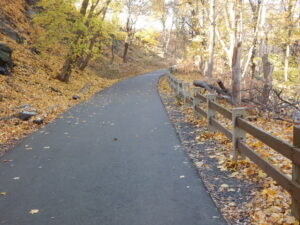
The Lackawanna River Heritage Trail — once a vision — now spans 30 miles from Pittston to Simpson and joins with the D&H Rail Trail to link more than 30 communities with parks, playgrounds, historic sites, and natural landscapes. The trail has become one of the region’s most beloved and heavily used public assets.

A Model of Partnership

Heritage Areas thrive on collaboration, and LHVA’s success is rooted in strong relationships with:

  • The National Park Service
  • PA Department of Conservation and Natural Resources
  • PennDOT
  • Pennsylvania Fish & Boat Commission
  • County and municipal governments
  • Local conservation groups
  • Educational institutions
  • Arts, cultural, and historical organizations

These partnerships advance every mile of trail, every environmental restoration, every interpretive program, and every heritage tourism event.

Honoring Our Past, Building Our Future

As LHVA celebrates 25 years as a National Heritage Area, the work is far from finished. Major initiatives now underway — including multimodal trail connections, environmental education programs, wetland restoration, improved recreational access, and new interpretive exhibits — will shape the next generation of outdoor recreation and heritage tourism in Northeastern Pennsylvania.

The story of the Lackawanna Valley continues to evolve, and LHVA remains committed to ensuring that story is told with accuracy, authenticity, and pride — while delivering real, on-the-ground improvements to the places we call home.

About the Lackawanna Heritage Valley Authority

The Lackawanna Heritage Valley Authority is the region’s designated management entity for the Lackawanna Heritage Valley National and State Heritage Area and the steward of the 70-mile Lackawanna River Heritage Trail. LHVA manages easements, secures and administers state and federal grants, and oversees all capital, engineering, and public-access improvements along the trail corridor. In partnership with federal, state, and local agencies, LHVA delivers projects and programs that preserve the Valley’s history, strengthen communities, and expand access to outdoor recreation.

Students Help Reconnect Carbondale to Lackawanna River Heritage Trail

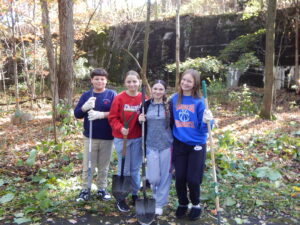
CARBONDALE — On a crisp October morning, the next generation of trail stewards rolled up their sleeves along the Lackawanna River. Fifty seventh- and eighth-grade students from Carbondale Area Junior/Senior High School traded their classroom desks for work gloves and shovels, spending Career Exploration Day restoring the John Street Trailhead on the Lackawanna River Heritage Trail.

Under the guidance of the Lackawanna Heritage Valley Authority (LHVA), students planted 50 young pin oaks through DCNR’s Keystone 10 Million Trees program and used the NeighborWorks NEPA Mobile Toolkit to cut back invasive bamboo and clear river views. The hands-on work revealed more than just the landscape—it uncovered the story of their own community.

Before the cleanup, LHVA Operations Director Owen Worozbyt guided students along the trail, sharing how the once-abandoned Delaware & Hudson rail corridor and its 116-year-old bridge have been transformed into a vibrant community space that blends history, recreation, and conservation.  “It’s amazing how many kids live just a few blocks away and have never been down to the river,” Worozbyt said. “Once they see it, you can tell it changes how they think about their hometown. That’s what this day is really about— helping them see the connection between where they live and the landscape that shaped it.”

By the end of the day, students had left their mark not only on the trailhead but also on their understanding of how local heritage and the environment connect. Their work reflects LHVA’s mission to inspire stewardship through education, community engagement, and hands-on experience.

 Carbondale’s Riverfront Reborn: A New Launch into the Lackawanna River

Construction is moving forward on the new Lackawanna River boat launch at the John Street Trailhead in Carbondale — an exciting step toward reconnecting the community with its riverfront.

Crews from Stafursky Paving Company are shaping the site, laying a solid foundation that will soon become an ADA-accessible ramp leading paddlers directly into the Lackawanna River. The project, managed by the Lackawanna Heritage Valley Authority, marks the first phase of a larger effort with the Lackawanna River Conservation Association to establish a state-designated Lackawanna River Water Trail.

Once completed, this launch will offer a dedicated four-mile paddling route from Carbondale to LHVA’s upcoming river access point in Mayfield, opening up scenic stretches of the river that have been largely hidden for generations. Paddlers will be able to experience a rare view of the Lackawanna — winding through wooded banks, historic bridges, and landscapes that once powered America’s Industrial Revolution.

This transformation reflects Carbondale’s evolution — from its roots in coal and rail to a community that celebrates recreation, conservation, and outdoor adventure.

By 2026, LHVA expects to see the first kayaks and canoes glide down this revitalized section of river, symbolizing a new chapter in the valley’s story — where the sounds of nature replace the echoes of the mines, and the river once again becomes a place for everyone to explore and enjoy.

Volunteers Show Love For the Trail

The Lackawanna River Heritage Trail is more than just a pathway for walkers, runners, and cyclists — it is a community treasure, cared for by the people who love it most. Recently, two inspiring stories of stewardship showed just how much volunteer spirit keeps the trail strong, safe, and beautiful.

Peggy and Joe Pesta: Clearing the Way

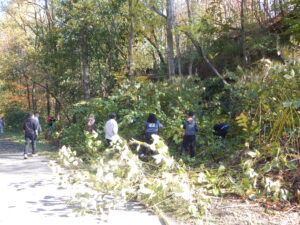
Peggy and Joe don’t just enjoy the Lackawanna River Heritage Trail; they actively give back to it. When they came across a downed tree blocking the Elm Street section of the trail, they didn’t hesitate to act. With broom and saw in hand, they cleared the debris, swept the path, and restored safe passage for fellow trail users. Their efforts are a shining example of how individual initiative and care can make an immediate difference.

Scranton Prep Students: A Day of Service

On the same weekend, an energetic group of Scranton Prep students rolled up their sleeves and tackled a different challenge. Armed with gloves, rakes, and determination, the students spent their Saturday morning removing litter, hauling out discarded tires, and cleaning up debris along the trail. Every trash bag filled and every tire removed helps protect the health of the river, preserve habitat for wildlife, and ensure that this green corridor remains inviting for all.

Their teamwork and commitment not only improved the trail’s appearance but also reinforced the value of giving back to the community.

Join the Volunteer Family 🌟

The Lackawanna River Heritage Trail depends on the dedication of volunteers like Peggy, Joe, and these students. Their hard work shows that stewardship is a shared responsibility — one that builds stronger connections between people, nature, and place.

If you’d like to join our volunteer efforts, we’d love to have you! Please contact John Morrow, Volunteer, Special Events, and Trail Coordinator, at jmorrow@lhva.org.